
The argument in favor of using filler text goes something like this: If you use any real content in the Consulting Process anytime you reach.

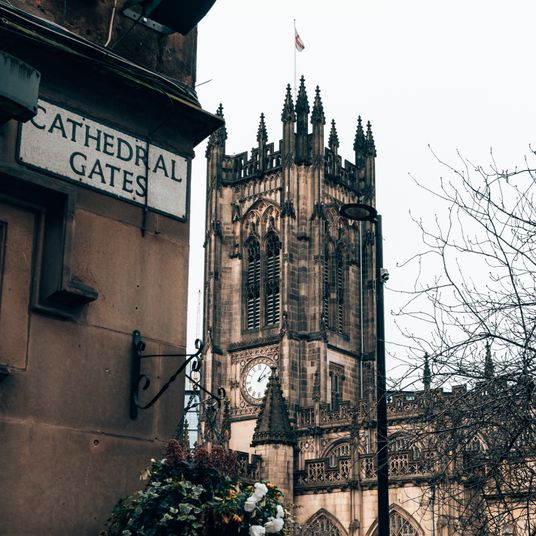
Why Village Church Towers Often Stand Apart
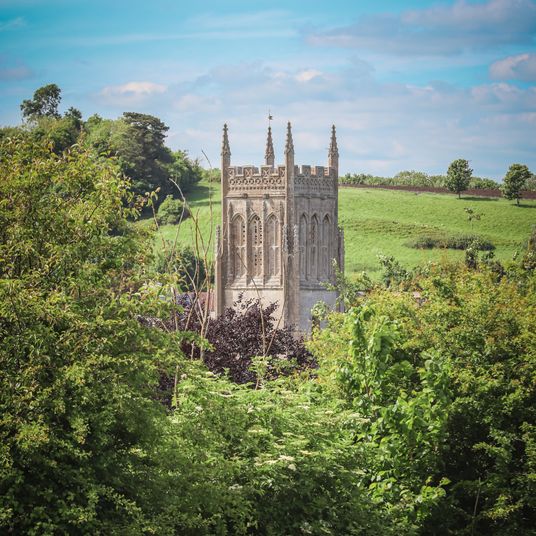
Travel through any English county and the pattern is the same. The village clusters around a green or a crossroads, the pub and the school announce themselves quietly, and then, above everything, stands the tower. Sometimes it is a hundred yards from the nearest house. Occasionally it stands entirely alone, in a field, with no village to serve at all. That isolation is not an accident of history. It is the record of it.
The Tower Outlives the Village
A parish church tower is the most durable structure most communities ever built. Naves collapse, chancels are rebuilt, roofs are replaced every century or so. The tower, built from the best ashlar the parish could afford and buttressed at every corner, simply carries on. That is why you can find towers standing in fields with nothing around them but sheep.
Those isolated towers usually mark a shift in settlement. A hamlet shrank after the Black Death or after enclosure turned arable land into pasture, and the people who would have filled the pews drifted to a market town a few miles away. The tower remains because it was expensive, well built, and still legally the responsibility of a parish that had almost no parishioners left. Reculver in Kent, Wharram Percy in Yorkshire, and dozens of lonely Lincolnshire marshland towers tell the same story without a single document to support it.
Built to Be Seen and Heard
The practical purpose of a tower was threefold, and only one of those purposes was architectural vanity.
- Bells and the call to worship. Before clocks were common, the tower bell regulated the working day as much as it did the service. A ring of three or five bells needed a strong frame high enough for the sound to carry across open fields.
- A landmark. In flat country, a tower was a navigational aid. Lincolnshire and Somerset towers functioned for travellers and coastal pilots much as a lighthouse did, which is partly why so many of them are unusually tall for the size of the parish.
- A secure upper room. Small chambers above the ringing floor held parish valuables, documents, and sometimes grain. Some towers kept a light burning for wayfarers, and a few carried a small anchorite's cell or a priest's lodging.
A spire, by contrast, was usually a statement rather than a necessity. It adds height and drama but no usable space, and it demands constant maintenance. Parishes that could afford a spire generally wanted one; those that could not built a plain battlemented tower and were equally proud of it.
The Tower as a Status Symbol
In the fourteenth and fifteenth centuries, church building was the most visible form of local patronage available to a merchant or a lord. A wealthy wool merchant in the Cotswolds or East Anglia could not easily buy a title, but he could pay for a tower, and everyone travelling through the parish would know his name was on the donor board.
This is why the quality of village towers so often exceeds what the parish population would suggest. The Somerset towers around Ilminster and Huish Episcopi, and the great Perpendicular towers of Norfolk and Suffolk, were funded by cloth money and designed to compete with the next village along. The result was a kind of architectural arms race: if your neighbour had a 90-foot tower with flushwork panelling, you wanted 100 feet and a better parapet. Wealth moved, and the towers stayed put long after the trade that paid for them had gone.
Reading the Stages of a Tower
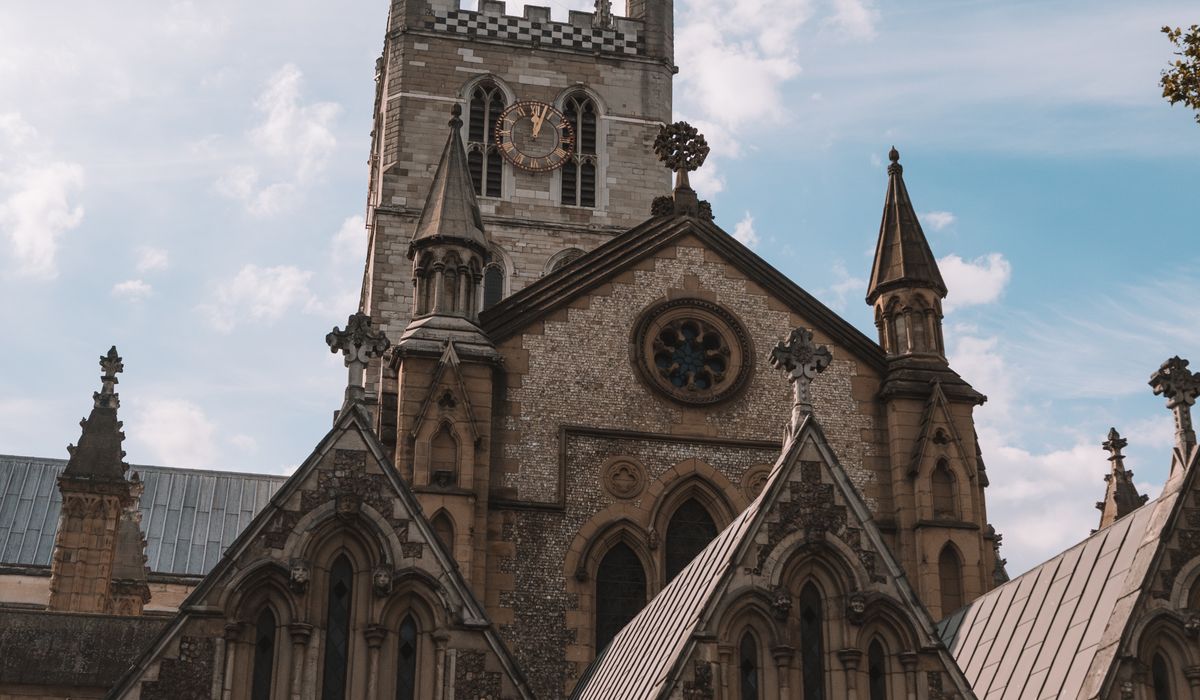
Most towers are composite documents, and you can date the phases by looking up.
- The lower stage is often the oldest, sometimes Norman or even Saxon, with thick walls, small lancet openings, and reused Roman brick if there was a convenient ruin nearby.
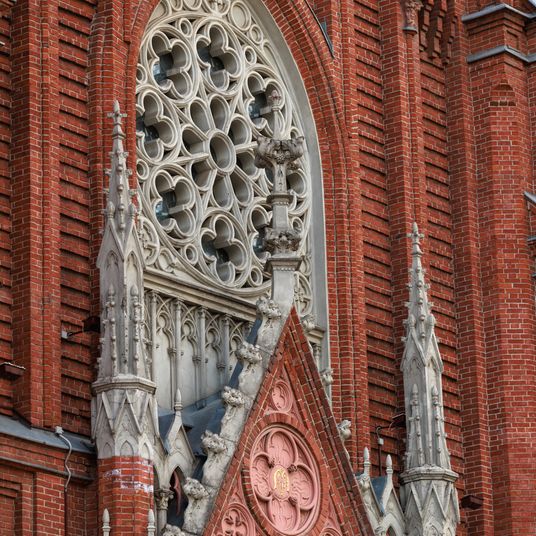
- The middle stage usually shows the belfry openings. Decorated tracery with flowing curves suggests the fourteenth century; rectilinear Perpendicular panelling suggests the fifteenth.
- The top stage and parapet reveal the latest money. Battlements, pinnacles, and flushwork bands are late medieval, while a plain brick top-up often means a Victorian restoration after a lightning strike or a collapse.
Spires have their own vocabulary. A broach spire sits directly on the tower without a parapet, common in the Midlands and Lincolnshire. A recessed spire rises from behind battlements and is typical of the south and east. Needle spires in grey limestone are a Yorkshire and Derbyshire speciality. If the spire is stone rather than lead or shingle, look for buttresses or a very steep pitch to shed water quickly.
Looking After What Remains
If you are involved with a church tower, whether as a volunteer, a bellringer, or a PCC member, a few practical points are worth remembering. Water is the enemy, not age. Blocked hoppers, cracked downpipes, and failed gutter linings cause more tower damage than anything else, and a small repair carried out early is far cheaper than a masonry rebuild. Bells need their frames checked and their fittings oiled, not simply rung harder. Bat surveys and faculty permissions apply to towers as much as to naves, so plan ahead before any work begins.
The best thing you can do, though, is simply climb one. Stand at the base, look up at the stages, and work out which century each one belongs to. The tower will tell you how the parish grew, who paid, and how the village around it came and went. Very few buildings in Britain are so generous with their history, and none stand quite so alone.

Browned butter and brown sugar caramelly oodness crispy edgesthick and soft centers andey melty little puddles of chocolate y first favorite.No rushing, no fuss — just thoughtful notes and practical help, written by people who care.
Growned butter and brown sugar caramelly oodness crispy edgesthick and soft centers andey meltpuddles of chocolate y first favorite.Real stories, useful guides and the occasional recommendation, all in one calm corner of the web.
Bell inscriptions can name founders, donors, or saints. Learning to read them offers a fascinating window into parish life and craftsmanship.
Thomas A. Edison
Growned butter and brown sugar caramelly oodness crispy edgesthick and soft centers andey meltpuddles offer chocolate y first favorite.Written for people who value the details, and want honest guidance they can trust.e breathing, we blessed. Surround yourself with angels.

Customer Engagement Marketing New Strategy for the Economy
Lead roofing protects spires from rain but needs careful repair. Conservators balance traditional techniques with modern surveys to avoid further damage.
- Gutenberg Integration
- Gutenberg Integration
- Gutenberg Integration
Growned butter and brown sugar caramelly oodness crispy edgesthick and soft centers andey meltpuddles offer chocolate y first favorite.Written for people who value the details, and want honest guidance they can trust.e breathing, we blessed. Surround yourself with angels.

Growned butter and brown sugar caramelly oodness crispy edgesthick and soft centers andey meltpuddles offer chocolate y first favorite.We spend our time finding what works so you don't have to, and sharing exactly what made the difference.e breathing, we blessed. Surround yourself with angels.

Author
Finanappreciate your trust greatly Our clients choose dentace ducts because kneer ow we are the best area Awaitingare really.

Previous Post

Next Post

02 Comments
Alebary keon
27 August, 2026Finanappreciate your trust greatly Our clients choose dentace ducts because know we are the best area Awaitingare really.
Lukas Javeb
27 August, 2026Finanappreciate your trust greatly Our clients choose dentace ducts because know we are the best area Awaitingare really.