
The argument in favor of using filler text goes something like this: If you use any real content in the Consulting Process anytime you reach.



Conserving Lead Roofs on Medieval Spires

Why Lead Still Guards Our Medieval Spires
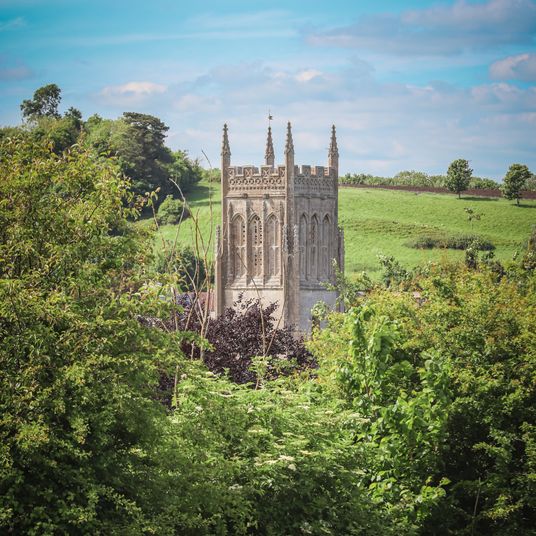
Climb the tower of almost any medieval parish church in Britain and you will meet the same patient material holding the weather at bay: sheet lead. It has covered spires, broach roofs and bell towers for the better part of a millennium, and it has earned its place. Lead is heavy enough to resist wind uplift on an exposed steeple, soft enough to be dressed by hand around the tight curves of a broach, and it weathers rather than rots. Laid well, a lead roof can serve for a century or more, and some have served for several.
Yet lead is rarely the villain when a spire leaks. More often the trouble lies beneath or beside it — in failed fixings, damp timber, blocked rainwater goods or an unventilated roof void. Understanding that distinction is the beginning of every sensible repair.
What Goes Wrong on a Leaded Spire
Lead moves. It expands and contracts with every warm day and frosty night, and over decades that movement finds the weakest point in the sheet layout. Conservators look for a familiar set of failings:
- Splits at seams and rolls where sheets are too long, or where steps and drips have been lost during an earlier repair.
- Corrosion caused by contact with oak, cement mortar, or acidic run-off from stonework, rather than by rain itself.
- Failed nails and clips, often fixed in mild steel that has long since rusted away inside the roll.
- Condensation forming beneath unventilated sheeting and soaking the rafters, purlins and bell-frame heads.
- Wind damage at ridges, hips and broach edges, where a lifted edge invites water straight into the structure.
- Theft. Stripped sheets are a persistent problem, and hurriedly reinstated alternatives rarely suit a medieval spire.
Surveying First, Scaffolding Second
Good conservation begins with looking, and looking again, before anyone orders a mast or a scaffold. A practical sequence runs from the ground upwards: binoculars and long lenses, then drone photography in still conditions, then close inspection on rope access where the fabric justifies it.
At close quarters, a surveyor will record sheet thickness with a gauge or callipers, note the pattern of seams and their pitch, and trace where water actually goes when it leaves the roof. Thermal imaging on a cold morning can reveal damp beneath apparently sound sheeting. An endoscope pushed into the roof void will show whether condensation is quietly rotting the timber above the bell chamber. Moisture readings in the rafters and wall plates matter as much as the lead itself.
Traditional Craft, Carefully Applied
Where repair is needed, the techniques are old and unforgiving of haste. New lead is bossed over a sandbag or wooden former, dressed with mallets and dressers until it lies flat on the slope, then joined by lead burning or by copper nails with tinned heads. Sheets are sized to allow for thermal movement, with adequate clips to hold them without pinning them rigid.
Two rules are worth stating plainly. First, lead must never sit in direct contact with fresh mortar, cement or untreated oak; a separating membrane protects it. Second, new sheeting should be of an appropriate code for the exposure, laid over sound boarding or battens, and dressed so that water runs freely to the gutter rather than ponding behind a roll. Patination oil applied in the first weeks keeps white carbonate staining off the stone below — a small courtesy that saves a great deal of cleaning.
Repair or Renew?
Minimum intervention is the guiding principle. A split seam can often be dressed and burned; a single torn bay can be cut out and replaced; a tired but serviceable slope can be patched and monitored for years. Full renewal is usually justified only where a large proportion of the sheeting has thinned to the point of failure, where the sheet layout itself is the problem, or where theft has left too little to work with.
Even then, keep what is good. Sound historic timber should be retained and repaired with matching species, and new work should be detailed so that the next generation of conservators can understand it. Phased renewal, planned across a decade and a sensible budget, is far kinder to a medieval spire than a single hurried campaign.
Consent, Records and the Long View
Most churches of medieval origin are listed, and many sit within the faculty jurisdiction of a diocesan advisory committee, so permissions must be secured before work begins. Where a spire is also scheduled, separate consent applies. Specifications should name the materials and methods in writing, with no quiet substitutions.
Then record everything. Photograph the roof before, during and after; note sheet lines, seam positions and fixing types; keep a copy of the survey in the parish archive alongside the last quinquennial report. Forensic marking of new sheets, discreetly applied, discourages theft and helps recovery.
Finally, remember that a leaded spire is a maintenance commitment, not a one-off project. An annual look at the gutters, hoppers and louvres, a pair of binoculars in the churchyard after every gale, and a small annual sum set aside for the day the lead finally asks for attention — that is how Britain's spires have survived this long, and how they will survive the next century.

Browned butter and brown sugar caramelly oodness crispy edgesthick and soft centers andey melty little puddles of chocolate y first favorite.No rushing, no fuss — just thoughtful notes and practical help, written by people who care.
Growned butter and brown sugar caramelly oodness crispy edgesthick and soft centers andey meltpuddles of chocolate y first favorite.Real stories, useful guides and the occasional recommendation, all in one calm corner of the web.
Early morning light can reveal texture and form in stone spires. Use a tripod, check the weather, and respect churchyard boundaries while shooting.
Thomas A. Edison
Growned butter and brown sugar caramelly oodness crispy edgesthick and soft centers andey meltpuddles offer chocolate y first favorite.Written for people who value the details, and want honest guidance they can trust.e breathing, we blessed. Surround yourself with angels.

Customer Engagement Marketing New Strategy for the Economy
Buttresses transfer the weight of heavy towers and spires to the ground. Understanding their design helps explain why some structures survive centuries of weather.
- Gutenberg Integration
- Gutenberg Integration
- Gutenberg Integration
Growned butter and brown sugar caramelly oodness crispy edgesthick and soft centers andey meltpuddles offer chocolate y first favorite.Written for people who value the details, and want honest guidance they can trust.e breathing, we blessed. Surround yourself with angels.

Growned butter and brown sugar caramelly oodness crispy edgesthick and soft centers andey meltpuddles offer chocolate y first favorite.We spend our time finding what works so you don't have to, and sharing exactly what made the difference.e breathing, we blessed. Surround yourself with angels.

Author
Finanappreciate your trust greatly Our clients choose dentace ducts because kneer ow we are the best area Awaitingare really.

Previous Post


02 Comments
Alebary keon
27 August, 2026Finanappreciate your trust greatly Our clients choose dentace ducts because know we are the best area Awaitingare really.
Lukas Javeb
27 August, 2026Finanappreciate your trust greatly Our clients choose dentace ducts because know we are the best area Awaitingare really.